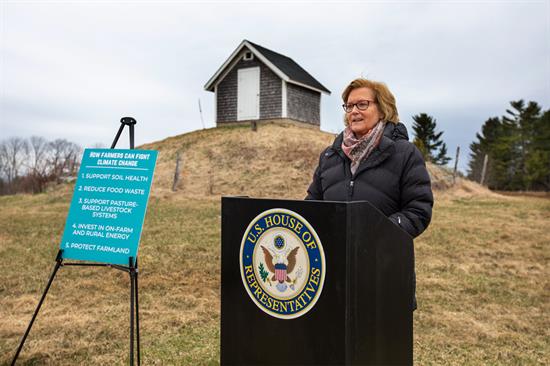
Congresswoman Chellie Pingree (D-Maine) flew to Washington this morning to cast her vote in favor of an emergency COVID-19 relief package which includes key provisions secured by Democrats to expand coronavirus testing and deliver billions in critical aid to health care providers and small businesses. A vote is expected onH.R. 266, the Paycheck Protection Program and Health Care Enhancement Act, this evening.
H.R. 266 encompasses a bipartisan agreement to provide $310 billion in additional funding for the Small Business Administration’s (SBA) Paycheck Protection Program (PPP), which thousands of Maine businesses have utilized. It also contains several key provisions added at the insistence of House and Senate Democrats, including:
-$25 billion to expand COVID-19 testing and a requirement that the Secretary of HHS submit to Congress a COVID-19 Strategic Testing Plan no later than 21 days after enactment.
-$75 billion for hospitals and other health care providers to recoup losses from the COVID-19 pandemic and help them purchase desperately needed Personal Protective Equipment (PPE).
-$30 billion set-aside within PPP for small banks and credit unions and Community Development Financial Institutions (CDFIs), to ensure that financial institutions in Maine and other smaller states are not squeezed out by big banks.
-$60 billion to replenish the SBA Economic Injury Disaster Loan (EIDL) program and allow more $10,000 emergency grants for small businesses.
-Allowing small farmers to access the EIDL loan and grant programs.
“Widespread testing is the best possible way to get Mainers back to work and help our economy rebound. This bill will require the Trump administration to finally develop a national testing strategy and provide $25 billion for states to expand their COVID-19 testing capacity. Our health care providers will greatly benefit from the new infusion of federal relief to both offset their losses and help them acquire much-needed personal protective equipment to keep our doctors, nurses, and first responders safe,” said Pingree.
“This bill has several strong elements that will help our small businesses, but I know we have work left to do. I’ve heard from small businesses throughout Maine who’ve made it clear that SBA’s lending programs are not the right fit for them. While I am glad this legislation will now allow small farmers to take advantage of the EIDL program and help community-based banks to lend, it does not address the structural problems with the Paycheck Protection Program (PPP),” Pingree continued. “This funding package will help small businesses keep employees, but it is far from sufficient. For tens of thousands of Mainers who’ve lost their income, a one-time stimulus check is not enough to address the bills that are still arriving on time. In the next COVID-19 relief package, Congress needs to fix the PPP’s structural deficiencies, and consider a different model for maintaining the livelihoods of both workers and small businesses. I’ve cosponsored the Payroll Guarantee Act to provide immediate, direct cash support for workers missing paychecks. This approach, which is similar to those in the United Kingdom, the Netherlands, Ireland, France, Germany, Denmark, and Australia, would cover 100% of wages for workers and maintain their employer-sponsored benefits, and cover essential business expenses like rent to keep them afloat.”
Last week, Pingree urged House leadership to increase funding for small business relief and make commonsense fixes to the Paycheck Protection Program to ensure this aid is accessible to more small employers.
Pingree is a cosponsor of Congresswoman Pramila Jayapal’s (D- Washington) Paycheck Guarantee Act, which would avoid mass layoffs, maintain the important employer-employees relationship and keep workers paid and connected to their health care and other benefits.