Blog Posts
Why a progressive and a MAHA activist are joining forces against Big ChemicalBY REP. CHELLIE BY REP. CHELLIE PINGREE (D-MAINE) AND KELLY RYERSON
Washington,
April 8, 2026
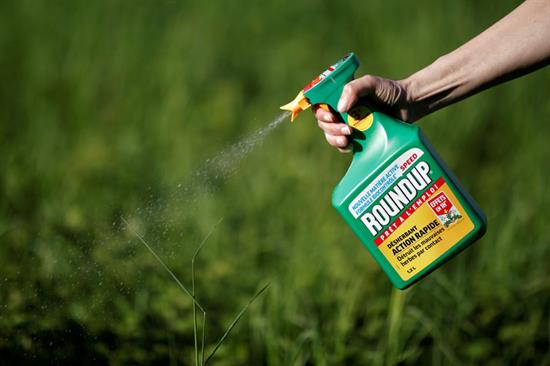
Op-Ed published in The Hill One of us is a progressive U.S. congresswoman and longtime organic farmer from Maine — someone who has spent decades fighting for organic and regenerative agriculture, access to healthy food, and accountability for corporate polluters. The other is a leader in the “Make America Healthy Again” or “MAHA” movement, a grassroots movement advocating for access to nutritious food and reducing reliance on synthetic inputs in agriculture. Moms who care about the safety of the food their kids are eating. MAHA advocates — everyday Americans who are concerned by the health effects of ultra-processed foods — are often associated with Robert F. Kennedy Jr. and voters who backed President Trump. And yet here we are, united by three simple beliefs: that everyone should be able to eat food that is free of toxic chemicals; that people should have proper warning about possible health-risks associated with chemical use; and that giant corporations should not get special immunity when their products pose real health risks. Behind the headlines about glyphosate, the active ingredient in Roundup, are real human beings: a school groundskeeper who developed non-Hodgkin’s lymphoma after years of spraying Roundup; a homeowner diagnosed with the same cancer after using it around his property for decades; a California couple, both diagnosed after years of exposure; a child in France born with a severe congenital disorder; a mother who lost her infant daughter soon after birth. These are not statistics. They are people whose lives were upended while one of the most powerful chemical companies in the world insisted everything was fine. Bayer has now paid roughly $10 billion to settle lawsuits related to Roundup. The company recently announced a proposed additional settlement of up to $7.25 billion to address current and future cases. You do not set aside that kind of money because there is nothing to worry about. You do it because the scientific, legal, and moral pressure has become impossible to ignore. Yet powerful interests are working overtime to make sure those families never get their day in court. Our fight is about to reach two major flashpoints. First, the House is moving toward a floor vote on a farm bill that includes pesticide language with sweeping consequences. Rep. Pingree offered an amendment in committee to strip that language from the bill during the recent House Agriculture Committee markup. Nearly every Democrat voted yes. Not a single Republican joined them. But the fight is far from over. The provisions in question would strengthen federal pesticide preemption by removing states’ ability to regulate pesticide usage, strip states and communities of their ability to warn consumers of health risks and establish a liability shield to protect chemical manufacturers from being held accountable when their products make people sick. Maine is one of seven states with local pesticide ordinances and warning requirements designed to protect people and water. This industry-written language — rubber stamped by Republicans on the House Agriculture Committee — would gut those protections. Second, on April 27, the Supreme Court is scheduled to hear Monsanto v. Durnell, a case that could determine whether people harmed by pesticide exposure can continue to bring state-law failure-to-warn claims against chemical manufacturers. We will be outside the court that morning, alongside advocates and MAHA supporters from across the political spectrum, for the “People vs. Poison” rally. This is not an abstract legal dispute. It is about whether ordinary people get their day in court when corporations fail to warn them about risks. The chemical industry wants Americans to believe this is all overblown. But EPA safety reviews for pesticides take place every 15 years. The last risk assessment for glyphosate was decades ago, in 1993. That is not a serious approach to protecting public health in 2026, when the science on toxic exposures keeps evolving and the toll on families keeps growing. There is a deeper political lesson here too. For years, both parties have underestimated how much Americans care about toxins in their food, water and environment. The MAHA movement did not invent those concerns, but it has amplified them. That is why the White House’s full-throated support of Bayer and its move to back glyphosate production through an executive order caused such fury among the movement’s own base. Kennedy’s supporters saw it as a betrayal. The backlash proved that this is not a fringe concern — it is a live fault line in American politics, and voters across the spectrum are paying attention. The MAHA movement and Democrats do not agree on everything. But what we share is a refusal to let corporate interests write the rules and then hide behind agencies that move too slowly or rely too heavily on industry-submitted data. Farmers and families are the ones paying the price for that broken system. Not Big Chemical. Congress should reject any farm bill language that strips away state and local protections or hands chemical companies a liability shield. The Supreme Court should not close the courthouse doors to people seeking justice. And the public should join us on April 27 at the People vs. Poison rally to show that this fight is bigger than any one bill or any one case. You do not have to agree on everything to agree on this: Our families deserve honest warnings, our communities deserve the right to protect themselves, and Big Chemical should not be above the law. Chellie Pingree represents Maine’s 1st District in the House of Representatives and serves on the House Agriculture Committee. Kelly Ryerson, known online as “Glyphosate Girl,” is an advocate for nontoxic food systems and a leader in the Make America Healthy Again movement. |