Press Releases
Pingree, Luna Introduce Bipartisan Bill to Ban Toxic Pesticide Paraquat and Protect Americans from Parkinson’s Disease
Washington,
June 18, 2026
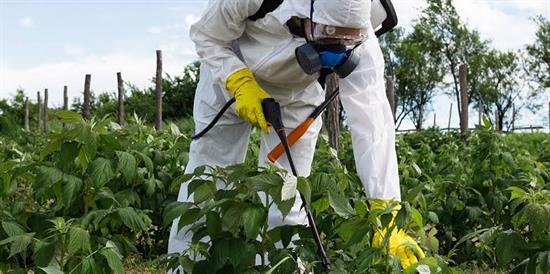
Congresswoman Chellie Pingree (D-Maine) and Congresswoman Anna Paulina Luna (R-Fla.) today introduced the Paraquat Prevention Act, legislation that would cancel all registered uses of the pesticide paraquat under the Federal Insecticide, Fungicide, and Rodenticide Act (FIFRA) and permanently prohibit its reregistration. “Vermont just proved a paraquat ban is possible. Now Congress must make it national. This pesticide is already banned in more than 70 countries and linked to Parkinson’s disease, yet EPA has been reviewing its safety since 2022 without finishing the job,” said Congresswoman Pingree. “I’m proud to introduce this bill with Congresswoman Luna, because all Americans deserve the same protection from this poison. Our bill cancels paraquat’s registration outright. No more reviews, no more waiting, no more excuses.” “Paraquat has been banned in over 70 countries, including every nation in the European Union, because the science is clear about the devastating neurological risks associated with exposure,” said Congresswoman Luna. “The United States has no business allowing a chemical linked to Parkinson’s disease to keep being sprayed on American farmland, and this bill ends that.” The bill directs the Environmental Protection Agency to cancel all existing paraquat registrations, revoke any tolerances permitting paraquat residue in food, and ban the sale and use of existing stocks upon enactment. This action comes amid growing concern over the health impacts of paraquat exposure, with multiple studies consistently linking this chemical to increased risks of Parkinson’s disease. Studies from the National Institutes of Health have found that individuals exposed to paraquat face a significantly elevated risk of developing the disease, with laboratory research demonstrating that the chemical directly damages the dopaminergic neurons whose destruction causes Parkinson’s. The European Union acted on this science in 2007, and more than 70 countries have since followed. Among them is China, which banned paraquat domestically in 2016 to protect public health while continuing to export the majority of its production, sending roughly 78 million pounds to American ports in a single year. Both the Parkinson’s Foundation and the Michael J. Fox Foundation have called for a ban on these grounds, which has found support on both sides of the aisle, which is why the bill has received bipartisan support. “Independent scientific evidence has found that exposure to paraquat has lead to increased risk of Parkinson’s disease, yet the EPA has continued to allow this pesticide to be used in our communities,” said Andi Fristedt, Executive Vice President, Chief Strategy and Policy Officer for the Parkinson’s Foundation. “By banning paraquat, the Paraquat Prevention Act would protect Americans and help create a world where fewer people develop Parkinson’s disease in the first place. The Parkinson’s Foundation is grateful to the bipartisan leadership of Representatives Luna and Pingree to help bring the U.S. one step closer to joining the more than 70 countries that have already banned paraquat.” “Paraquat exposure is one of the clearest preventable risks linked to Parkinson’s disease,” said Dan Feehan, chief policy and government affairs officer at The Michael J. Fox Foundation. “On behalf of the 1.2 million Americans living with Parkinson’s and related diseases, we thank Representatives Luna and Pingree for their bipartisan leadership on the Paraquat Prevention Act and look forward to supporting the bill throughout the legislative process.” The United States remains one of the few developed nations that still permits paraquat use, leaving American farmers, farmworkers, and rural families unprotected. This legislation would close that gap by removing paraquat from the market entirely and prohibiting any future pathway for reregistration. “We applaud Representatives Luna and Pingree for highlighting the threat of paraquat to farmers and rural communities. The people who feed us should not face twice the risk of developing Parkinson’s disease. States across the country have a clear path and example to end the use of one of the most toxic herbicides and should pass their own paraquat bans,” said Geoff Horsfield, legislative director for the Environmental Working Group (EWG). “MOFGA has long stood against toxic pesticides that harm farmers, families, and the land we all depend on. The evidence linking paraquat to Parkinson's disease is overwhelming and undeniable,” said Bill Pluecker, Public Policy Organizer for Maine Organic Farmers and Gardeners Association. “More than 70 countries worldwide have banned Paraquat. Farmers and rural communities in Maine and across this country have suffered from paraquat exposure for far too long. The time for federal action is now." View the full bill text here. Pingree is a longtime farmer and member of the House Agriculture Committee. She and Luna recently celebrated a win for the “Make America Healthy Again” movement after they successfully stripped dangerous, industry-written language from the Farm Bill that would pre-empt state rights to regulate pesticide usage or labeling and provide a liability shield for pesticide manufacturers. Earlier this year, President Trump signed an Executive Order to increase domestic production of glyphosate—a widely used weedkiller that has been linked to multiple health issues, including non-Hodgkin’s lymphoma. Pingree and Massie introduced the No Immunity for Glyphosate Act, which would undo Trump’s Executive Order. ### |