Blog Posts
The Dilley immigrant detention facility costs taxpayers millions. The human cost is even higher.My visit with 19-year-old asylum seeker Olivia Andre, who has since returned home to Maine, left me outraged.
Washington,
May 14, 2026
Tags:
Immigration
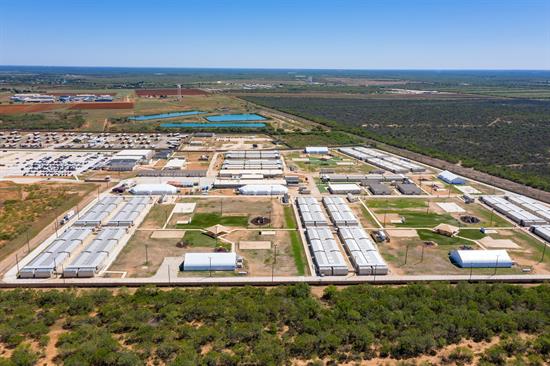
On a sunny day in Texas inside one of the nation’s most notorious immigrant detention facilities, I sat down with Olivia Andre, a 19-year-old asylum seeker whose story has garnered national attention. Despite it being nearly 90 degrees that day in Dilley, a small town about an hour outside of San Antonio, Olivia was bundled up in a down jacket. She was freezing. Her spirits, understandably, were low and she told me she hadn’t been sleeping much. She’d been suffering from headaches and had lost nearly 20 pounds in the six months she spent inside what has become known as the Family Trailer Prison. For more than an hour, we talked about her family and the life that was unfairly ripped from her when Olivia, her mother and siblings were detained by immigration enforcement in November of 2025. I brought a hefty stack of legal documents with me, as well as family photos and letters from loved ones to give her in hopes they would lift her spirits. Because the government is court-ordered to release migrant children and their parents from prolonged detention, the rest of Olivia’s family — mother Carine Balenda Mbizi; brother Joel Andre, 16; and sister Estafania Andre, 14 — were released from Dilley in March. But since Olivia is technically an adult, and not the legal guardian of her siblings, she was not released with them. The last thing I wanted to do when I visited was give her any false hope, but, after hearing near-daily updates from her lawyers, I was optimistic she’d be soon released. And I promised her that we were doing everything we could to get her out. The very next day, a federal district judge ordered her release. Soon, she’d finally be on a plane bound for where she belongs: back home in Portland with her loved ones. Around 11:15 p.m. on Friday, May 8, Olivia finally made it home to Maine, where a raucous and overjoyed crowd of family, friends, neighbors and fellow Mainers was ready to welcome her home. I can’t imagine the overwhelming sense of relief she and her family must be feeling right now. I sincerely hope that, in the months and years ahead, they’ll be able to find the peace and happiness they deserve. At the same time, it’s impossible not to feel outraged by the cruelty and callousness the Andres have experienced, and the senseless suffering they — and countless others — have been forced to endure. All on the American taxpayer’s dime. Despite the astronomical cost of $15.3 million a month, or roughly $1,000 per person a day, life inside the Dilley facility is pure misery. (And let me be clear: misery is the point, but more on that later.) While on our official congressional oversight visit, Reps. Joaquin Castro, Henry Cuellar, Sylvia Garcia, Adelita Grijalva, Christian Menefee, Mark Takano and I saw the conditions firsthand and spoke directly with more than 60 people who were detained there. The facilities appeared clean and were presented to us in a real “nothing to see here” kind of way. The food seemed fine and the medical bay was nice enough, though completely unoccupied. But outside of the personnel’s overview, which was literally read to us from a script, what we heard from the actual people forced to live there was deeply disturbing. Here’s what a day in Dilley looks like, according to Olivia and the people we met with: You wake up by 6 a.m. for breakfast after a sleepless night, trying to eat what you can because lunch and dinner are often worse. By mid-morning, you are back in bed, exhausted, depressed or dealing with headaches and untreated health needs. You share a room with 10 to 12 other people so there is no privacy. Time drags on through the afternoon and by the evening, you just want to sleep. But the harsh lights stay on, you’re cold and the room is restless with anxiety and crying from your bunkmates. It’s no wonder Olivia was feeling utter despair when I met with her there. And, as I alluded, that is the point. The Department of Homeland Security operates under the mantra “detain to deport.” Regardless of whether a person has a pending asylum claim, has been denied due process, or is legally permitted to be in the United States, the Trump administration wants to detain and deport as many immigrants as they can. Their inhumane and un-American anti-immigration agenda demands it. Olivia and many others said they’d been pressured to take the $2,500 offer to self-deport. “You will never see your mother again,” they would tell her. “You may as well take the money and go home.” Of course, by “home” they don’t mean Portland, where she lives. They mean the Democratic Republic of the Congo, where her family fled horrific violence before claiming asylum in the U.S. in 2022. On their journey, Olivia’s family suffered an unimaginable tragedy: her 8-year-old brother, Manuel, drowned while crossing the Darién Gap, where flash floods can be deadly and the journey itself is a measure of a family’s desperation. It’s important to note that in Dilley, there are no violent criminals or anyone with a criminal conviction. This specific facility is meant for parents and their children who, at most, have minor immigration infractions equivalent to a parking ticket. Many, though, were simply caught up in our country’s broken immigration system. They have active asylum claims, green cards, visas and valid work permits. Maybe they are waiting for their court date or for their claim to be processed, which can take years, but they are doing everything they are legally supposed to do. Olivia never should have been detained for this long in the first place. Nor should anyone whose only “crime” was fleeing violence and seeking a better life for themselves and their family — and has followed the rules at every turn. For every Olivia whose story breaks through, there are countless others still trapped in facilities like Dilley, without national headlines, public pressure or members of Congress advocating on their behalf. Dilley must be closed for good. This is a facility built to incarcerate families and children, operated at enormous public expense, and used to pressure vulnerable people into giving up their rights. Children do not belong in detention. Families seeking safety do not belong in detention. And no private prison company should profit from keeping them there. We shouldn’t have to fight this hard to protect people’s constitutional rights — or to get people out of these horrific detention centers. But we will keep fighting. I want to thank my team, Olivia’s attorneys, my colleagues, local advocates like Project Relief Maine, Ms. Rachel and everyone who had a hand in amplifying her story and helping secure her freedom. When I met Olivia at the airport after her long flight home, the smile on her face could’ve lit a thousand rooms. I know she and her family have a long road ahead. But I hope she knows just how many people will be with her. Every step of the way. I hope every innocent person who has been detained by this cruel and callous administration will one day feel the same joy Olivia is feeling right now — and that her story inspires all of us to continue pushing for the freedom and justice they deserve. |