Press Releases
Pingree Demands Answers from DHS After Fatal ICE Shooting in Biddeford‘This needless death raises the question of whether DHS has learned anything from prior tragedies, or whether DHS has the decency to care,’ Pingree said. ‘If DHS continues to ignore systematic failures and dismiss each fatal shooting as an isolated event, then the loss of trust in this institution is well and truly deserved, and we need to consider how to fundamentally change our approach to immigration enforcement.’
Washington,
July 17, 2026
Tags:
Immigration
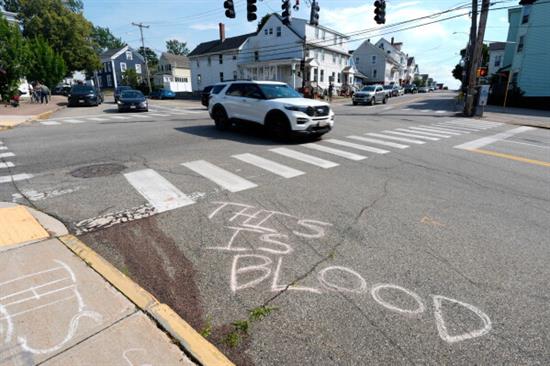
Congresswoman Chellie Pingree (D-Maine) today sent a letter to Department of Homeland Security (DHS) Secretary Markwayne Mullin demanding answers about the fatal shooting of her constituent, Johan Sebastián Durán Guerrero, by Immigration and Customs Enforcement (ICE) officers in Biddeford, Maine, on July 13.
“[O]nce again, a family and community is grieving because a person is dead after an encounter with your officers,” Pingree said. “My constituents are being asked to trust that deadly force was justifiable and are left to confront the question of whether federal immigration officers are operating under policies that prioritize aggressive efforts to meet quotas over the preservation of human life.”
In light of recent reporting about the agent’s disturbing background, and DHS’s reported hiring push, Pingree asks Mullin how his agency is ensuring quality and experience of new hires and what information would be disqualifying in an agent.
ICE’s agents who spoke on the record with The Intercept said there were, in fact, agents equipped with body cameras on the scene, but that they weren’t active or recording video–information which contradicts the Secretary’s own statements to Pingree in their phone call on Wednesday. Her letter seeks clarity on this discrepancy and asks what other recordings exist, and when footage will be released publicly.
Pingree also asks DHS to explain whether the Biddeford operation was targeted and whether Durán Guerrero was its intended target; to detail the planning and risk assessment conducted beforehand; identify any witnesses; and more.
Her full list of questions is available in the letter here and copied below.
“The people of Maine deserve better than vague assurances after another fatal encounter involving immigration officers,” Pingree said. “We are a nation of immigrants. They are our family, friends, and our neighbors. A community is grieving and angry—as is our state. If that is not enough for the Department, immigrants are vital to Maine’s workforce; without them, our economy would crumble.”
Pingree also joined the other members of Maine’s Congressional Delegation in sending a letter to Secretary Mullin on Tuesday calling for a comprehensive, transparent, and expedited investigation. In addition, Pingree and Reps. Jayapal (D-Wash.), Garcia (D-Texas), Raskin (D-Md.), and Thompson (D-Miss.) led nearly 200 Members in calling for independent investigations into Lorenzo Salgado Araujo and Johan Sebastian Guerrero’s deaths and demanded that ICE halt removal proceedings against the witnesses.
+++ Dear Secretary Mullin, I write with profound outrage regarding the fatal shooting of my constituent, Johan Sebastián Durán Guerrero, by Immigration and Customs Enforcement (ICE) officers in Biddeford, Maine, on July 13, 2026. I appreciate you making yourself available for a call; however, the reality is that once again, a family and community is grieving because a person is dead after an encounter with your officers. My constituents are being asked to trust that deadly force was justifiable and are left to confront the question of whether federal immigration officers are operating under policies that prioritize aggressive efforts to meet quotas over the preservation of human life. As such, I am following up on several matters I brought up with you. First, I question the justification your agents have relied on to arrest and detain my constituents. You told me your agents focus their enforcement efforts on individuals with final orders of removal, but, as my office has witnessed firsthand, and heard repeatedly from local lawyers and organizations, ICE is detaining Mainers who are lawfully pursuing asylum or other status through the proper channels. These are not people with final orders of removal at all; they are actively engaged in the legal process your agency claims to respect. Beyond that, we also know a final removal order does not necessarily indicate the end of the legal process; due process allows for motions to reopen, petitions to review, and applications for humanitarian relief. Arresting and detaining individuals as though they have no legal recourse and their due process is complete ignores the complexity of immigration law, is a waste of taxpayer dollars, and risks needlessly engaging aggressive enforcement tactics. This intentional mischaracterization of the process ignores that immigration enforcement is largely a civil administrative process, not a criminal one. Yet we have seen a clear pattern of that distinction being ignored, with preventable deaths chalked up to “necessary” enforcement. No family should have to wonder whether their loved one would still be alive had federal officers exercised better judgement, had received better training, or followed different procedures. Every use of deadly force demands rigorous oversight, complete transparency, and total accountability. Anything less is unacceptable. For months, even in the past week, Americans have witnessed increasingly aggressive ICE operations conducted in their communities. Despite repeated warnings and calls for greater transparency after the deaths of Renee Good, Alex Pretti, and Lorenzo Salgado Araujo, another person has been killed during an immigration enforcement operation. Mainers demand and deserve accountability. Congress has the responsibility and authority to determine whether ICE has created an enforcement culture that unnecessarily escalates encounters and places civilians at greater risk. Therefore, I need answers to the following questions:
The people of Maine deserve better than vague assurances after another fatal encounter involving immigration officers. We are a nation of immigrants. They are our family, friends, and our neighbors. A community is grieving and angry - as is our state. If that is not enough for the Department, immigrants are vital to Maine’s workforce; without them, our economy would crumble. To this end, I expect full cooperation between your department and Maine State Police and Biddeford Police Department in any independent investigation that they pursue, including full access to evidence and witnesses. This needless death raises the question of whether DHS has learned anything from prior tragedies, or whether DHS has the decency to care. If DHS continues to ignore systematic failures and dismiss each fatal shooting as an isolated event, then the loss of trust in this institution is well and truly deserved, and we need to consider how to fundamentally change our approach to immigration enforcement. I expect a complete written response to these questions no later than July 24, 2026. Given the gravity of this incident, I also request that DHS promptly brief my office on the status of its internal review and any immediate policy changes under consideration. ### |