Press Releases
As Trump’s War in Iran Drives Up Heating Oil Prices, Pingree Demands Administration Provide Relief for Skyrocketing Winter Heating Bills
Washington,
October 7, 2026
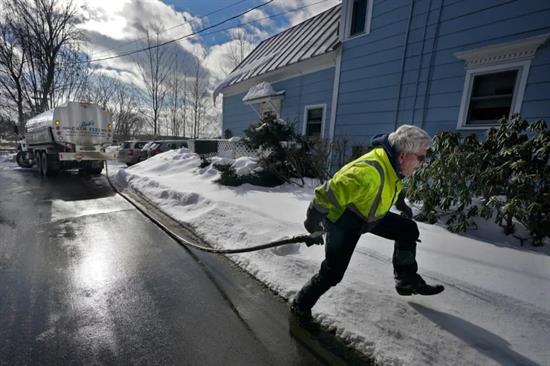
Congresswoman Chellie Pingree (D-Maine) and a group of 24 Members of Congress representing Northeastern states are pressing the Department of Energy (DOE) to take immediate action to address the rapidly rising cost of heating oil, which has surged around 60 percent since the start of President Trump’s war in Iran. In their letter—led by U.S. Senator Elizabeth Warren (D-Mass.) and Representatives Stephen Lynch (D-Mass.) and Lori Trahan (D-Mass)—the lawmakers urged the DOE to support an immediate end to the war and prioritize lowering energy costs for the winter, warning that rising prices will force families to choose between heating their homes and paying for basic necessities. “Heating oil costs for the upcoming winter are projected to reach record levels, and families throughout the northeastern United States will likely bear the brunt of these costs,” wrote the lawmakers. The President’s war in Iran has played a large part in driving up the price of heating oil. The closure of the Strait of Hormuz has pushed crude oil from $72 to over $100 a barrel, causing a massive increase in heating oil costs in the United States. American families that rely on heating oil are projected to pay about $600 more to keep their homes warm this winter than last year. In Maine, which uses more residential heating oil per capita than any other U.S. state, the statewide average price of heating oil recently hit a record $6.02 a gallon—marking an 80% increase over last year.
In addition to jacking up the cost of heating oil, the Trump administration has made or attempted to make heating costs for the upcoming winter even higher by:
“As Americans face immense difficulty with keeping the heat on, the administration appears to be cutting off all avenues for meaningful relief, handing out tax cuts to billionaires, spending tens of billions of dollars on an unnecessary foreign war, and jacking up costs for struggling families,” the lawmakers continued. “To address these costs for American families, we urge you to reverse course on the senseless war in Iran, undo the administration’s cuts to clean energy and grid modernization programs, work with Congress to repeal the tax increases imposed on energy efficiency upgrades and other ways to lower heating costs, and end the administration’s attacks on LIHEAP,” the lawmakers concluded. The lawmakers were joined by Senators Richard Blumenthal (D-Conn.), Ed Markey (D-Mass.), Jack Reed (D-R.I.), Bernie Sanders (I-Vt.), Peter Welch (D-Vt.), and Sheldon Whitehouse (D-R.I.); and Representatives Gabe Amo (D-R.I.), Jake Auchincloss (D-Mass.), Becca Balint (D-Vt.), Joe Courtney (D-Conn.), Rosa DeLauro (D-Conn.), Maggie Goodlander (D-N.H.), Bill Keating (D-Mass.), Seth Magaziner (D-R.I.), John Mannion (D-N.Y.), Gregory Meeks (D-N.Y.), Grace Meng (D-N.Y.), Seth Moulton (D-Mass.), Richard Neal (D-Mass.), Chris Pappas (D-N.H.), Paul Tonko (D-N.Y.), and Nydia Velázquez (D-N.Y.). The full letter is available here and is copied below. +++ Secretary Wright: We write to ask that you take immediate action to address the impact on our constituents of the rapidly rising cost of heating oil fueled by the President’s war in Iran and the administration’s failed policies. Today, the price of heating oil is around 60 percent higher than before the Iran war.1 The costs will be borne by American households struggling to heat their homes this winter while making ends meet. Instead of continuing down this path, we urge you to support an immediate end to the war and to stop blocking or restricting Department of Energy (DOE) programs that would help American families lower their energy bills. Heating oil costs for the upcoming winter are projected to reach record levels, and families throughout the northeastern United States will likely bear the brunt of these costs. American families that rely on heating oil are projected to pay about $600 more to keep their homes warm this winter than last year. The price of heating oil has steadily risen to more than $4 a gallon, nearing record highs. Families from our states will shoulder the brunt of these prices: around one-third of New England homes rely on heating oil to heat their homes, and in some states, around half do. Families that warm their homes with heating oil are estimated to see their energy bills spike from $1,740 to around $2,300, placing immense strain on families and forcing them to make impossible decisions about whether to keep the heat on, the fridge stocked, or critical medical necessities in supply. The President’s war in Iran has played a large part in driving up the price of heating oil. The closure of the Strait of Hormuz has disrupted global trade in crude oil and impacted global supplies of heating oil and diesel, both refined products distilled from crude oil. Before the Iran war, crude was trading at $72 a barrel; now, the price for crude oil has jumped to more than $100 a barrel. Government reports indicate that national supplies of distillate fuel oil, which includes heating oil, are at their lowest levels on record. The Energy Information Administration (EIA) has assessed that constrained global supplies are “contributing to low U.S. diesel inventories and high diesel prices.” Meanwhile, U.S. refiners and fossil fuel companies have seen banner profits while shipping heating oil abroad. As EIA notes, constraints in the global supply for heating oil have “raised domestic prices and incentivized U.S. exporters to increase distillate exports.” U.S. weekly exports of distillate products, including heating oil, hit a record high in August. President Trump promised that high energy prices would be a “small price to pay” for a “little while” at the start of the war. In March 2026, you said that “prices have likely peaked and they’ll start going down,” stating that “[t]his is a weeks…not a months thing.” Yet, months later, energy prices have continued to surge. Adding insult to injury, the Trump administration has made heating for the upcoming winter season even more expensive in other ways.
As Americans face immense difficulty with keeping the heat on, the administration appears to be cutting off all avenues for meaningful relief, handing out tax cuts to billionaires, spending tens of billions of dollars on an unnecessary foreign war, and jacking up costs for struggling families. To address these costs for American families, we urge you to reverse course on the senseless war in Iran, undo the administration’s cuts to clean energy and grid modernization programs, work with Congress to repeal the tax increases imposed on energy efficiency upgrades and other ways to lower heating costs, and end the administration’s attacks on LIHEAP. Thank you for your attention to this important matter. ### |