Press Releases
Pingree, DeLauro: New GAO Report Builds Case for Congressional Action on Textile Waste
Washington,
October 16, 2026
Today, Congresswoman Chellie Pingree (D-Maine), founder of the Slow Fashion Caucus and Ranking Member of the House Appropriations Subcommittee on Interior, Environment, and Related Agencies, and Congresswoman Rosa DeLauro (D-Conn.), Ranking Member of the House Appropriations Committee, released a new Government Accountability Office (GAO) report on developing a textile circular economy in the United States. The report, requested by Pingree and DeLauro, builds on GAO’s December 2024 report on textile waste and lays out how policymakers can take federal action to address textile waste as momentum grows in states and other countries.
“GAO’s 2024 report made clear that the growing textile waste crisis demands federal leadership. Now, as states and other countries take action, this new report gives Congress an important resource to build on that momentum,” said Pingree. “Keeping textiles in use longer can cut pollution and create opportunities for American businesses that repair, reuse, and recycle them. I recently introduced the Textile Waste Reduction Act to lay the foundation for a coordinated national response. This report strengthens the case for that effort and outlines options for how Congress can seize this opportunity to reduce waste, support American businesses, and protect our environment.” “States and countries around the world are already figuring out how to keep clothing out of landfills, and this report shows the United States does not have to be left behind,” said DeLauro. “A healthier textile economy means jobs in repair, resale, and recycling. It means less pollution in our soil and water. And it means lower costs for communities running out of landfill space. GAO found that what is holding us back is a lack of infrastructure, funding, and reliable data. Congress can fix all three. It is time to build a new kind of textile industry here at home – for the economy, for the environment, and for workers.”
GAO’s December 2024 report documented the environmental harms of textile waste and found that federal efforts to address it were fragmented and given a lower priority than other goals. GAO recommended that Congress consider directing and expressly authorizing federal entities to take coordinated action to reduce textile waste and advance textile recycling.
The new report broadens that work to examine a textile circular economy: a system that keeps clothing and other textiles in circulation through durable design, reuse, repair, and recycling. Drawing on research, site visits, and interviews with 49 stakeholders, GAO identifies potential benefits including new jobs and markets in secondhand retail, repair, recycling, and infrastructure development; reduced pollution and demand for raw materials; and changes in how consumers purchase and dispose of textiles. GAO also identifies barriers to realizing those benefits, including limited domestic infrastructure and funding, gaps in comprehensive data, and a lack of common terminology and standards. The report documents policies being proposed, enacted, or implemented in U.S. states and abroad, including textile producer responsibility programs in California, France, and the Netherlands, and the European Union. These efforts offer U.S. policymakers lessons as they consider how to support textile circularity nationwide. GAO’s menu of policy options ranges from maintaining the federal status quo to expanding industry responsibilities, providing incentives such as tax credits, restricting textile disposal in landfills, improving data collection, and educating consumers. The report describes opportunities and considerations associated with these approaches without endorsing a particular option. Pingree’s Textile Waste Reduction Act would establish a coordinated federal framework to advance textile circularity. The legislation would require a comprehensive National Textile Circularity Strategy, create an Interagency Working Group and stakeholder advisory board to coordinate and inform federal activities, improve textile waste data collection, and make existing federal funding opportunities easier to identify. These steps would help provide the foundation for policymakers to evaluate and pursue the opportunities outlined in GAO’s new report.
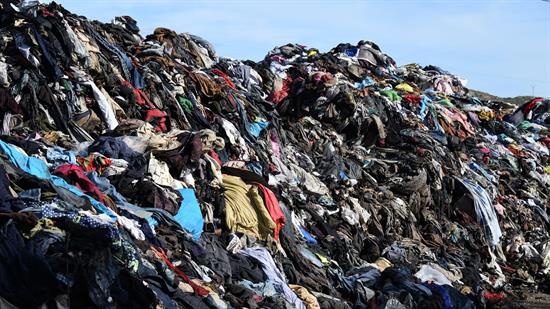
Textile waste is now one of the fastest-growing waste streams in the United States, with millions of tons of textiles discarded each year and the vast majority ending up in landfills. These discarded materials may leach contaminants including PFAS and microplastics into water and soil and increase costs on communities grappling with capacity shortages at landfills. Despite the harmful impacts of this fast fashion-driven increase in textile waste, there has been no coordinated effort at the federal level to tackle this problem and support a more circular textiles economy. In addition, over the past several decades, hundreds of thousands of fiber and textile jobs that once sustained communities across America have shifted overseas, harming American farmers and communities in the process. Pingree founded and launched the Congressional Slow Fashion Caucus in June 2024 to create climate-smart policies to reduce, repair, rewear, and recycle textiles. The caucus has garnered widespread support, including from American Circular Textiles, the Garment Worker Center, Al Gore’s Climate Reality Project, Patagonia, ThredUp, fashion designer and slow fashion influencer Kelly Dempsey, and more. ###
|